
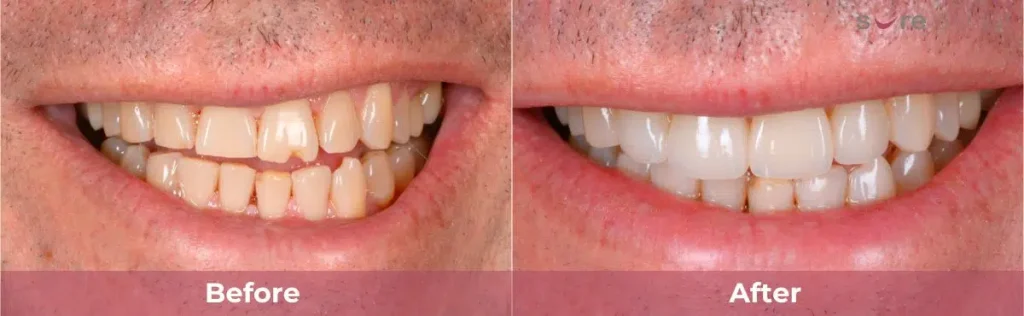
Presenting Clinical Problem
A long-term patient presented with progressive anterior structural concerns prioritising functional integrity over aesthetic enhancement.
- Enamel Fractures: Multiple crack lines on anterior teeth indicating structural compromise
- Catastrophic Failure Risk: Progressive crack patterns creating potential for tooth fragmentation
- Structural Integrity Priority: Patient concern focused on tooth strength and longevity rather than aesthetic improvement
The primary clinical objective was to provide protective coverage preventing catastrophic tooth failure whilst respecting patient priorities regarding functional outcomes over aesthetic considerations.
Treatment Plan & Clinical Process
A focused treatment approach was developed emphasising structural reinforcement as primary treatment goal.
Phase 1: Comprehensive Structural Assessment: Thorough evaluation of crack patterns, depth, and progression risk informed treatment planning. Assessment confirmed need for protective restoration to prevent tooth fragmentation and potential tooth loss.
Phase 2: Treatment Discussion: Patient consultation emphasised dual benefits of porcelain veneers including structural protection as primary outcome and aesthetic improvement as secondary benefit. Treatment planning respected patient autonomy and prioritised structural concerns.
Phase 3: Definitive Restoration: Porcelain veneers were fabricated and placed on affected anterior teeth. Veneer placement provided protective coverage and structural reinforcement through bonding to remaining sound tooth structure, reducing catastrophic failure risk whilst addressing crack visibility.
Clinical Outcome
The treatment successfully provided protective coverage for compromised anterior teeth over three visits spanning six weeks. Porcelain veneers reinforced structural integrity, reducing risk of catastrophic tooth failure whilst achieving aesthetic improvement as secondary benefit. The treatment outcome respected patient priorities regarding functional protection over cosmetic enhancement. Long-term success depends on regular professional monitoring for continued crack progression, restoration integrity maintenance, and management of causative factors including parafunctional habits or traumatic occlusal forces.
Individual outcomes vary based on extent of underlying structural compromise and crack progression patterns. Results experienced by one patient do not necessarily reflect outcomes others may experience.
How do porcelain veneers provide structural protection?
Porcelain veneers bond to remaining sound tooth structure, creating integrated unit that distributes occlusal forces more evenly across compromised tooth. This bonding reinforces weakened areas and may slow crack progression. However, veneers cannot guarantee prevention of future fractures, particularly with deeply progressing cracks or continued exposure to excessive forces.
When are veneers appropriate for structural concerns versus aesthetic goals?
Veneers serve dual purposes including structural reinforcement through bonding and aesthetic enhancement through coverage of defects. Treatment indication depends on crack severity, aesthetic concerns, extent of structural compromise, and patient priorities. Some cases prioritise structural protection whilst others emphasise aesthetic improvement. Clinical assessment and patient goals guide appropriate treatment selection.
Sure Dental is a dental practice in Wavell Heights, caring for patients across Brisbane’s northside.
