
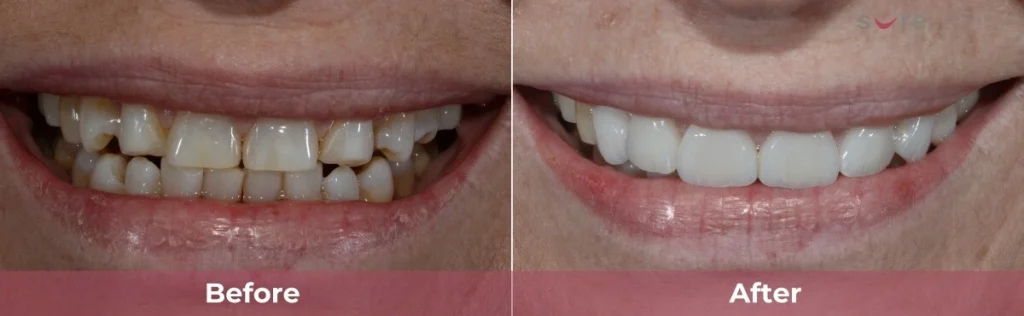
Presenting Clinical Problem
A middle-aged woman presented with multiple anterior aesthetic concerns affecting smile confidence.
- Dental Discolouration: Generalised tooth staining and yellowing affecting anterior aesthetics
- Minor Malalignment: Slight anterior tooth irregularity compromising smile symmetry
- Crown Proportion Concerns: Upper anterior teeth displaying reduced vertical dimension
- Previous Composite Restoration Issues: Existing composite veneers showing staining and chipping
The primary clinical objective was to achieve durable aesthetic improvement with natural-appearing restorations whilst addressing underlying structural and colour concerns.
Treatment Plan & Clinical Process
A staged treatment approach was implemented following initial composite veneer trial and subsequent conversion to definitive porcelain restorations.
Phase 1: Initial Conservative Approach: Composite resin veneers were initially placed to allow patient assessment of aesthetic changes before committing to definitive treatment. This approach provided valuable information regarding patient expectations and aesthetic preferences.
Phase 2: Assessment & Planning: Following composite veneer complications including chipping and staining, comprehensive evaluation led to treatment plan revision. Digital mock-up technology demonstrated potential outcomes with porcelain restorations, establishing realistic expectations.
Phase 3: Definitive Treatment: Professional teeth whitening was performed to optimise baseline tooth colour. Six porcelain veneers were placed on upper anterior teeth following appropriate preparation protocols. Treatment sequence over multiple appointments ensured optimal aesthetic integration and functional outcomes.
Clinical Outcome
The treatment successfully addressed discolouration, minor alignment irregularities, and crown proportion concerns. Porcelain veneers provided superior durability and stain resistance compared to previous composite restorations. The staged approach allowed patient adaptation to aesthetic changes and informed final treatment decisions. Long-term success depends on maintenance of oral hygiene, avoidance of excessive forces, and compliance with regular professional monitoring.
Individual outcomes vary based on oral habits, underlying tooth structure, and adherence to care recommendations. Results experienced by one patient do not necessarily reflect outcomes others may experience.
Frequently Asked Questions for Wooloowin Patients
What factors contribute to veneer staining and chipping?
Composite veneers are more susceptible to staining from dietary pigments, tobacco use, and beverages such as tea, coffee, and red wine. Chipping can result from excessive occlusal forces, parafunctional habits, or inadequate material thickness. Porcelain veneers offer superior stain resistance and durability but are not immune to damage. Protective measures and appropriate oral habits remain essential regardless of material selection.
How many appointments are typically required for porcelain veneer treatment?
Porcelain veneer treatment generally requires 3-5 appointments over several weeks, including consultation, preparation, temporisation, and final placement visits. Additional appointments may be necessary for preliminary treatments such as whitening or diagnostic mock-ups. Treatment duration varies based on case complexity, number of teeth involved, and any preparatory procedures required.
Sure Dental is a dental practice in Wavell Heights, caring for patients across Brisbane’s northside.
